how blogging builds your brand

imageIf you read about how Twitter can get you published, you may recall that I hinted at blogging. Well, hold on to your pencils, pens, and keys, because this one can get a bit tricky.

Most authors today have a blog. This is because having an online presence is essential. I repeat, essential.

Why?

Because agents and publishers want to know these three things:

Your ability to attract an audience/following

Your publicity potential

Your continued writing skills

All of these apply to your platform because they are letting publishers know that you are marketable/sell-able. Publishers are not just investing into your book—they are investing into you.

I am not saying you have to sell your soul here. But I am saying that a blog can do wonders.

But where do you begin? After all, as I said, you can find most anyone online these days.

How do you stand out? How do you make a unique writing blog? How do you appeal to those that could one day be your book-buying audience?

As always, I’ve got some advice for you.

Know Your Audience

You want to attract people who will, one day, buy that book you’ve written/ you’re writing. You may love to blog about recipes, but are you selling a cookbook? Are you writing for teens? Find a way to incorporate that into your blog. Writing historical fiction or non-fiction? Use facts and images from that era in your blog. Writing self-help? Give advice! If your blog is not attracting the same audience as your readers, publishers might use that as a reason to pass you by. Take this from someone who has personally had that happen—know your audience!

Post Regularly

Whether you’re posting once a month, twice a month, once a week, every day—make it consistent. Let your readers know they can depend on you. If you post on Tuesday at 5AM—do so every time you have a post. Regulate your site to see when you have the most traffic and adjust accordingly, but try to post at the same time, every time.

Build a Community

Find a few blogs that have similar pieces of your puzzle. Read, comment, and follow those blogs. Do this until you have a stead community of 5-10 blogs that you are in communication with. They post on your blog, you post on their blog, you like, follow, share, and support each other. This community is so important. You might be able to launch a blog and grab supporters and never have to do much more, but it’s unlikely. You want them to love you, and they want you to love them. So find and build a community to help your marketing even more.

Before long, the blog will work for you.

There are so many blogs out there, good and bad, that it might be intimidating of starting your own. Everyone wants to be different and unique, and with a plethora of sites out there it may seem impossible to stand out. But let me tell you something: you will. Just like your story will fall into the hands of the right agent, editor, and/or publisher—your blog will attract the right readers who will love you because you are you.

Everyone is different, so find your voice and let others hear it. Your book is one way to share the stories building up inside you; your blog is another. Odds are, you won’t regret it.


This post was originally written for & posted on Stark Contrast Editing‘s blog. Make sure to check out Katelyn’s amazing new site and the services she and others offer. Plus, more posts by yours truly!


how working with an editor changed the way i write

OLYMPUS DIGITAL CAMERA

I was never good with criticism, good or bad. I have never been good with rejection, and I have never been good with someone telling me how to do something.

This sounds like a, “DON’T WORK WITH ME” advertisement as an author. BUT I PROMISE THIS WAS IN THE PAST!

After I finished my first true novel, one that had been years in the making, I sat down and was excited and ready to query. I wanted to start sending out my amazingness and have everyone faun over my words.

This was the dream. Isn’t it everyone’s?

Luckily, at this point in my writing I was blessed with a wonder CP who gently suggested that maybe I should consider working with an editor to work through some slow parts and make my manuscript the best it could be. While I wasn’t sure of cost and the idea of someone openly criticizing and making suggestions with my book-baby, I decided to give it a shot.

After e-mailing and going over some details back and forth, I began working with Katelyn from Stark Contrast Editing. I am blessed because I was basically her first client, and I think this is one thing that really made it easier on me to be open to criticism. She was patient and quick to respond, and understanding of many things I didn’t want to change at the time.

I can’t review Katelyn’s services justly, because she completely changed the way I write. She opened my mind to little things (action, not description) that I was pretty terrible at. Words or phrases that I overused (“sigh” and “that” and descriptive actions of the eyes), and so much more.

Though my first book was unsuccessful in scoring me an agent, I was confident that Katelyn had given me the tools to do even better. Once more, she encouraged me to start writing what I really wanted to write. I had worked with her on a YA Contemporary, but Historical Fiction was my passion, and ultimately I think my calling with writing.

I took her advice to heart and worked hard on my next manuscript. When consulting the very same CP who introduced me to Katelyn, she raved how much better this first draft was, and it was only off of her suggestions that I worked, queried, and scored an agent. Although I didn’t work with Katelyn on this one, I cannot deny that she didn’t completely makeover my writing process.

Yes, your book may be that good to begin with, but it seems to me there is no writer that has never had a typo or even just a sentence that didn’t make sense.

I would always suggest working with an editor over not– even if you don’t think you need one. Everyone needs an editor, and every writer is not an editor. Whether you hire someone or work with another writer in a personal way, it needs to be a trusted relationship that can help develop your story into a true masterpiece.


While I didn’t write this as a plug for Katelyn’s services, if you are looking for an editor I cannot recommend her more. She and Nikki (aka my wonderful CP I talked about) at Stark Contrast Editing are masters at what they do, and you couldn’t ask for better people to work with.


how twitter can get you published

twitter marketing_ehdunnWriting a book is hard enough, but now that you’ve got that (almost, completely, halfway) done, it’s time to start increasing your Internet footprint as an author (or dare I say brand).
Blog? If you can, but we will get to that later.

Right now we are going to talk about Twitter.

I’ll be honest, I had no clue what the point of Twitter was. I thought it was somewhere people shared that they were eating their food or watching a show or in general sending updates into the void that no one cared about.

As I started getting into the writing arena, a very good friend introduced me to the Twitter universe and all I could do to get plugged in. Slowly I was entering pitch contests and using hashtags to connect with other writers. I began exploring the literary world that I had no idea existed through bursts of 140 characters.

So don’t roll your eyes at me when I tell you that Twitter is an amazing tool. USE IT.

It can be overwhelming. You want to create your own hashtags and get the perfect mood of a tweet in so few characters, and you aren’t sure if you should follow your dream agent or ::gasp:: tweet him/her. Take a deep breath. I’ve got a few tips that I have learned over the years, some of which come from professionals.

First, if you’re looking for some handy hashtags for writers, check out THIS LINK and THIS LINK. They have a lot of good suggestions.

Second, follow your favorite people. An agent might tweet about a project they’re looking for that matches your manuscript, (#MSWL = manuscript wish list and it’s SO helpful), or an editor might let everyone know if she or he is open to new clients.

I’ll say it again: Twitter is your friend. USE IT.

Third, don’t tweet too much. Less isn’t exactly more with Twitter but you don’t want to annoy your followers so much that they decide to stop following you.  Using apps like Hootsuite can come in hand because it lets you schedule tweets ahead. If you’re doing a pitch contest, taking part in #1linewed, or just trying to capture people’s attention in general—tweet with purpose. Sometimes that takes planning.

Fourth, and last on my list—stay professional. It can be so easy to slip into an Internet battle or have someone send you something nasty off of an innocent tweet. But this is supposed to be a tool. You don’t want your future agent to remember a heated battle you had with someone over different authors, politics, or current events and decide you’re not worth the drama. Remember that you are using your author Twitter account to build your brand.

Over all, there is an amazing writing community just waiting on Twitter. It’s how I met my agent, through #PitMad, and it’s how many can get connected with the publishing industry.

Sign up. Explore. Learn. And USE IT. Twitter might just be the outlet that leads to your book’s publication. 


Are you on Twitter? Let’s connect! You can find me here or #writerslifeapparel here.


This post was originally written for & posted on Stark Contrast Editing‘s blog. Make sure to check out Katelyn’s amazing new site and the services she and others offer. Plus, more posts by yours truly!

building your marketing platform

imageWe have all faced a form of rejection. Recently, I faced one that was a big shot. As in, a pop-up wall…like a giant jack-in-the-box.
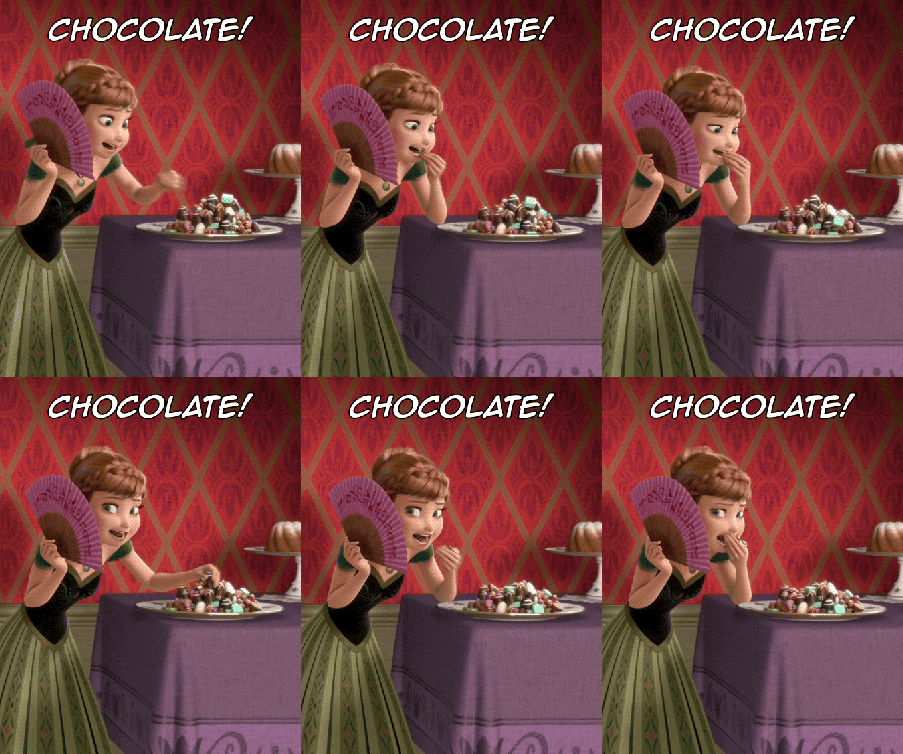
I imagine you take my meaning.

What I learned from the rejection was that my Internet footprint wasn’t sufficient.

It was scary, intimidating, and if I’m being honest, heartbreaking. 

It was such a shock because I felt like I had worked very hard on my online presence since before I started truly dedicating myself to writing my books. I put a part of me out there that was vulnerable and fun. And I had hoped it was creative enough to stand out.

If you’re wondering how to make yourself marketable, I am not a professional in this department. However, I have learned a thing or two recently, so I thought I’d share my knowledge with you.


FIGURE OUT YOUR TARGET

You need to know who you’re writing for and what you’re writing topic or theme is before you start a blog. If you’re an author, you need to make your blog relatable to the potential audience of your books. Whether that’s the writing community, teens, or little kids, make your online presence relatable to your future book readers.


BE CONSISTENT

The last thing you want when turning yourself into your own brand is to be wishy-washy. Whether you’re posting once a month, a week, or daily, always schedule your posts for the same time. This way your audience knows what to expect, and it will make it easier for them to depend on you. This helps with your image.


BE ACTIVE

Marketing yourself takes work. Posting on your own blog and sending out some tweets is not going to be enough. Reach out to those who are in similar boats as you; visit their sites or respond to their tweets, and eventually you’ll find others doing the same for you. This is a give-and-gain scenario. You will not be marketable or able to grow your brand if you aren’t proactive. Period. Give at least ten minutes a day to your online presence. Your activeness will eventually have a snowball effect and will pay off.


BE PATIENT

Creating a platform for yourself takes time. Once you decide what your platform is, it’s up to you (and eventually your agent and publisher) to build it plank by plank. But you are the front-runner in making sure it is supported so that it can grow.


Everything in the publishing business takes time, no matter what route you take. But every day you spend working on your platform is one more follower, one more re-tweeter, one more reader.

The publishing world is cutthroat, and publishers want to see that you know how to navigate the marketing waters. The time to start building your platform is right now! Design a blog, make a website, Tweet and Follow and Friend and Post, and do it every day.


my author Twitter account is: @emily_hdunn

#writerslifeapparel Twitter account is: @writerslifeapp

my Facebook page is: Emily Herring Dunn

my IG is: @emilyherringdunn

#writerslifeapparel IG is: @writerslifeapparel


Share yours in the comments! I’d love to connect and help each other out :).


This post was originally written for & posted on Stark Contrast Editing‘s blog. Make sure to check out Katelyn’s amazing new site and the services she and others offer. Plus, more posts by yours truly!

when life & writing overwhelm you

It is very easy for life to get the best of you.

And when I say you, I mean me.

Oftentimes life does not go as you wish. Days produce nothing but a longer to-do list for tomorrow, and months seem pointless when you haven’t reached that writing goal that’s been pushed to the back burner  because of family, or your daytime job, or personal reasons.

Believe me, I get it.

More than not, I find myself at war with my to-do list. Instead of cleaning my kitchen, I sit down to write for thirty minutes. The next morning, I’ll sometimes regret it. I mean, who can work when the kitchen is a mess? Not me. Or instead of writing, I’ll zone out in front of Netflix when the day is done and I’ll tell myself, “I’ll write twice as much tomorrow.”

If you remember a few past posts of mine, you know this is typical for me.

But the thing is, your writing is yours.

Sure, you may be stressed out about edits or deadlines. You may be stressed out over questions, blog posts, interviews, reviews–whatever. When it comes down to it, though: your writing is yours. Even if you signed away the rights for the movie, or for a translation, or any of that– your writing will always be yours.

And that shouldn’t overwhelm you.

I don’t want to be one to tell you what should and shouldn’t overwhelm you, how you should and shouldn’t feel. Everything in this life comes with a balance, and you have to find yours.

So here’s what I do when life & writing start getting to me and stressing me out, when really, they shouldn’t.

DO A LITTLE DANCEgiphy

Put on your favorite dancing music and shake it. There is nothing like movement to help you feel better.


EAT SOME CHOCOLATE

giphy

Chocolate is actually proven to raise your spirits. Seriously. I read it somewhere. Just a hershey kiss could be what it takes.


TAKE A NAP OR GO TO BED EARLIER

giphyKids aren’t the only ones who get cranky when they don’t get enough sleep. While you might think another cup of coffee and burning the midnight oil is the way to go, sometimes you do just need to slow down.


JOURNAL

tumblr_lpjajmiWvd1qcmptjo1_500

Your feelings, fears, excitement, dreams– get it all out so you can clear your head. It’s amazing how much better you feel after you put into words what’s overwhelming you and driving you crazy.


What I’m still learning– and probably will always be learning– is when things are getting to me… it’s usually best to clean the closet and let go of things that aren’t necessary. It’s hard to put yourself first sometimes, but especially when you get to a breaking point, it’s a necessity. You can’t give to others if you’re running on empty.

they are the exception. your writing is the rule.

imageEvery day I plan to write at night time. When I’ve taken care of everything on my to-do list, finished clean-up duty, and snuggled in to the couch with a blanket and my laptop.

And almost every day, I never get much, if any, writing done.

My name is Emily, and I am a morning person.

You’d think the progression of life would have changed the way I feel about mornings, but I have always been the one to get up early and seize the day. I feel most at peace when I have my first cup of coffee, sit down with my journal and planner, and figure out how the day is going to go.

It’s just how I am. But somehow I have yet to learn that that’s the time I should be writing.

We all have the idealistic relationship with writing. Let’s sit down with a snack, our laptop, our thoughts, and hash out a few thousand words in one sitting. Some people can do that. Some people have the luxury to do that, but most of us don’t.


Let’s be real.


So what do we do? How do we figure out the best time to write? And more importantly, how do we stick to it and make it happen? At what point do we need to put other activities to the side so we can dedicate more time to our writing? 

Figuring out the right time of day to write can help you when it comes to making writing the rule, not the exception.


TAKE NOTES

Are you grumpy in the morning and bouncing off the walls around 2pm? That’s your high-time! While you may not always be able to dedicate your best time of day to writing, at least find five minutes to jot some things down to feel accomplished.


BE INTENTIONAL 

Be intentional about making extra time to dig deep and work on your project, especially on the weekends or holidays. I’ve found myself setting my alarm for what may seem as an ungodly hour, but it works wonders for me to get those words on paper. When I’m able to seize those extra moments, I start my day feeling accomplished instead of getting to the end of the day feeling guilty for doing “nothing.”


DON’T FEEL GUILTY

There are always going to be times when you miss a moment or opt out of it to do something else. Writing may be your life and it may be your job and it may be your passion, but you’re always going to have other things to do, too. Don’t beat yourself up for not getting up one morning because you had a late-night with the baby. Or not staying up and writing but instead going out with friends.


There are always going to be special occasions. Visitors. Things to do. But the important thing is that they are the exception, and your writing is the rule the majority of the time.


You got this. Set that alarm and drink some more coffee—you’ve got some writing to do.


Like this post? Check out: finding the time to be a writer and writing through the distractions, too! 


This post was originally written for & posted on Stark Contrast Editing‘s blog. Make sure to check out Katelyn’s amazing new site and the services she and others offer. Plus, more posts by yours truly!

an author’s dream

an author's dreamWhen I was younger, I used to dream about being famous.

Didn’t we all?

It started with writing. From a young age I loved to read and write so much, I dreamed of my books being in the book fair catalog, and it only escalated from there. Every couple of years it would switch– pop star, movie star, Broadway star, symphony member–but overall it was the same concept:

I wanted to be known. I wanted to be recognized. I wanted to be famous.

That’s the world we live in. We want to be set above everyone else and talked about by people we don’t know. Even, sometimes, if it’s negative.

As I’ve gotten older, the dream has settled with my writing. While I still admittedly dream of being the next Ann Rinaldi or Janette Oke, mostly I just want to get my stories out there.

I want to release them into the wild. I want them to be read. I want them to be appreciated.

The written word is a beautiful thing. Someone has slaved away to string sentences together in a new style, his/her style, to form a story of his/her imagination.

I’m not trying to give myself too much credit here. But writing is work. Don’t be fooled in to think differently.

It is fun, of course, too. It is amazing when those voices come to life and everything flows like a stream in the desert–but the times when the water runs dry are the times you wonder what the heck you’re doing, and then realize how your passion is also work.

I know there are still those out there who dream of being famous. Who write to make the bestsellers list or hope their works will be turned into movies. There’s no shame in that.

But I think, over all, authors–writers–write because they have to. Because there are these stories inside just bursting through every pore of their bodies, and if they don’t come out, it’s like they’re purposefully trapping a dream from coming to life.

And we wouldn’t want that, would we?

If you are able to make your dream come to life, to the best of your ability, the only person who you harm if you don’t–is yourself.

If you’re an author, keep dreaming. You’re going to make it.

My coffee mug was a birthday present from my amazing CP/BFF. You can get yours here. Also, if you missed it & liked this piece, make sure to check out: own the word: you are an author.

own the word: you are an author

imageI used to say I was “just a writer.” That I “just write.”
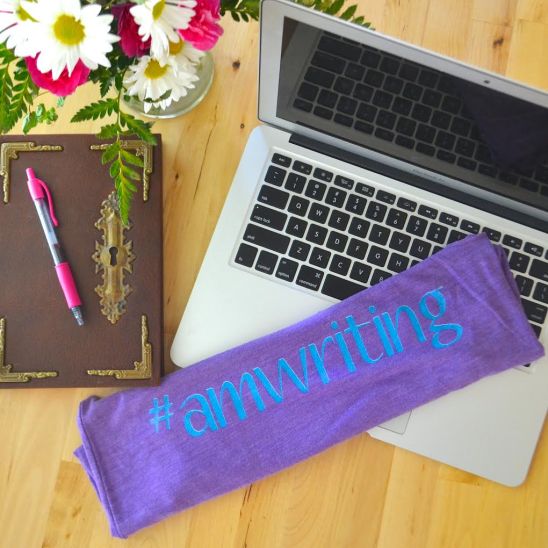
Whenever someone would call me an author, I would humbly respond, “I’m just a writer. I haven’t been published.”

Somewhere in my mind was this idea that I wasn’t a true author until my book was published. Not until I could see it on Amazon or a shelf at Barnes and Noble. Only then would I be a real author.

Not before. Not now.

Right now, I just write and dream of being an author. I’m an aspiring author.

But what does aspiring mean?

aspire

to long, aim, or seek ambitiously; be eagerly desirous, especially for something great or of high value.

Do I long, aim or seek to be an author?

author

person who writes a novel, poem, or essay; the composer of a literary work….

Well, according to those definitions–no. I don’t aspire to be an author.

I AM an author.

If you ask if I’m a person who longs, aims, and seeks to write a novel, poem, or essay, that’s wrong.

I’ve already done that.

I’ve already written a novel. I’ve written two, actually, and I’m working on a third. I’ve already developed the words and sentences and chapters and characters and everything that goes into the literary work.

So, I am not “just a writer.”

(In fact, according to the dictionary, there isn’t a difference. A writer is an author. They can be simultaneous. If someone is in the business of writing books, he or she is an author.)

It doesn’t matter if you haven’t been published. It doesn’t matter if you’re only halfway, or a third, or a fourth of the way through a piece of work.

YOU are an author.
You have come up with a beautiful, new idea. You are writing that idea. You are slaving away over every word choice, every twist and turn. You are getting to know your characters and bringing them to life. You are breathing the story in and out so others can one day do the same.

You ARE an author.
If you have queried a book that has been rejected countless times or you got an agent on your first try, you are an author. If you have gone on rounds and rounds of submissions, only to have to turn to another project, you are an author. If you have self-published and gone through the hard work of promoting your own story, you are an author.

You are an AUTHOR.
You have created a story, a life, a world out of nothing but words and your imagination. You have stayed up countless nights, lived off of coffee alone, and missed opportunities to make a deadline. You have sacrificed favorite characters or storylines for the sake of your art and stuck to your guns when you weren’t willing to sacrifice your hard work.

When you say you’re an aspiring author or you’re just a writer, you are saying that you are TRYING to be something, or you are MERELY something.

Don’t belittle yourself. Enough people are going to try to do that for you as time progresses.

YOU ARE AN AUTHOR.
Own it. Be it. Write it.

e209aa766f38b16


Get your “own the word” tee in pink, blue, yellow, or purple ombre. Available in various styles and colors!


This post was originally posted on Stark Contrast Editing‘s blog and has also been featured on Golden Wheat Literary‘s blog.


#writerslifeapparel

You may have noticed a new page recently showed up on my main page. If you didn’t, you can check it out: here.

If you want to save yourself a click, here’s the summary of it all: I’ve started a new business.

A line of shirts, to be exact. Well, and stickers. But that’s where it ends for now.

The other day I read an article about how important it was to set aside time for writing. To designate those hours as working hours, and to have something to wear, look out, or even eat that would help you focus on what you were there to do.

What is that?

WRITE.

unnamed-1

So I started to search. I searched, and searched, and searched– and I found nothing.

I found no shirts, or sweatshirts, or coffee mugs that really made me want them.

There are some out there. The cheesy shirts that say, “Watch out or you’ll end up in my novel,” or the mugs that say, “Editing Day.” All cute ideas, of course, but none of them were what I was looking for.

I decided, then, to create my own.

unnamed

After weeks of working on some designs, a logo, and recruiting some amazing people to help me out– #writerslifeapparel is ready to go.

You can find it on Twitter, Instagram, and TeeSpring.

unnamed-2


Please share your thoughts! Always looking for feedback to make the designs more geared towards YOU.


balancing writing, editing, querying, & writing some more

balancing writing editing querying writing moreI’m in a precarious spot with my writing life right now. I am currently on my first round of submissions to editors, I’m anticipating the possibility of edits, and all the while, I’m trying to write my new work-in-progress.

It’s exciting and nerve-racking, alternating between the two each nanosecond.

This isn’t much different than when you’re querying agents, deciding whether you should keep chipping away at the book you’re seeking representation for, or start a new book as you wait. You pace, debate, decide, change your mind…and change it again.

Where is the balance? How do you function with so many things happening at the same time?

Never fear, my advice is here! (Just remember I’m still learning, too.)

STAY CALM

No matter what you’re doing, your nerves won’t help you. Sit down and organize what you have happening so that you can see it on paper. And I do mean paper. WRITE IT OUT. There is something about actually forming the words yourself, not just typing them, that helps clear your mind and settle the nerves. Once you have everything on paper, it’ll help you prioritize what you should attack first and breathe while doing it.

GO IN ORDER

Edit BEFORE you query. Not during or after. BEFORE.

While you’re querying, have a new project to work on. Even if it’s not a new book—have something to keep you from going back and second-guessing the book you’ve released into the wild.

HAVE PATIENCE

Hardest. Thing. Ever.

I say this half-heartedly because I’m awful at following it myself. If you’re querying agents, be patient and know you’ll hear back, and eventually you might stop jumping when your email goes off. Same thing applies if you’re on submission with publishers.

But let’s be real, those heart palpitations when you see an email from an/your agent will probably never go away. I know mine haven’t. But having a new project to work on while this is happening will keep you focused as a writer and invested in something new.

DON’T STOP WRITING

Much like anything else with writing, it’s good to have something to distract you: a new project, a craft, an event—anything to keep your mind off your email and your submitted book.

But don’t let querying or being on submission be an excuse to stop writing. A writer has to write, and if you stop just because your nerves are racing, you’re going to lose some of your momentum, and you could be withholding potential for your next great idea.

A break is needed from time to time, but don’t let yourself get out of the habit of writing. Ever.

Once you hit submit, have the confidence that your words speak for themselves.

And then get back to writing some more.


This post was originally written for & posted on Stark Contrast Editing‘s blog. Make sure to check out Katelyn’s amazing new site and the services she and others offer. Plus, more posts by yours truly!